 Service

Technical data Cracking of hydrocarbonsArticle no: P3110800 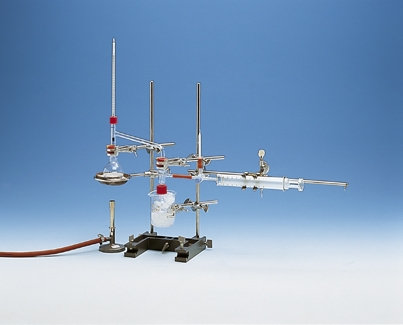
<!DOCTYPE html PUBLIC "-//W3C//DTD XHTML 1.0 Transitional//EN"
"http://www.w3.org/TR/xhtml1/DTD/xhtml1-transitional.dtd">
Principle Under the influence of energy, e.g. heat, light, and electric discharge, all chemical compounds can be broken down into smaller fractions. The reaction can continue up to the elements themselves. In general, low-volatile crude oil components are disintegrated as of approximately 400 °C. The presence of a catalyst lowers the activation energy of this cracking reaction so that the decomposition products are formed already at lower temperatures. Saturated carbohydrates are then transformed into smaller saturated and unsaturated molecules. Cycloalkanes are dehydrated to aromatic compounds, straight-chain molecules to branched-chain molecules, and branched-chain molecules to cyclic molecules. Benefits
Tasks Investigate the cracking of hydrocarbons using a model experiment. Learning objectives
|
Robert-Bosch-Breite 10 – 37079 Göttingen – Germany
www.phywe.com

