(function () { function textOf(el) { return (el && el.textContent || "").replace(/\s+/g, " ").trim(); } function resolveItemUrl() { var match = window.location.search.match(/[?&]item=(\d+)/); if (!match) { return null; } return window.location.origin + "/a-" + match[1] + "/"; } function loadAccordion() { var url = resolveItemUrl(); if (!url) { return Promise.resolve(null); } return new Promise(function (resolve, reject) { var xhr = new XMLHttpRequest(); xhr.open("GET", url, true); xhr.onload = function () { if (xhr.status < 200 || xhr.status >= 400) { reject(new Error("item page " + xhr.status)); return; } var doc = new DOMParser().parseFromString(xhr.responseText, "text/html"); resolve(doc.querySelector(".phywe-item-accordion")); }; xhr.onerror = function () { reject(new Error("item page network error")); }; xhr.send(); }); } function parseItemBlocks(scope, withQuantity) { if (!scope) { return []; } var rows = scope.querySelectorAll(".itemslist .row.itemblocks"); var items = []; for (var i = 0; i < rows.length; i++) { var cols = rows[i].children; if (!cols.length) { continue; } var nameLink = cols[0].querySelector("a"); var numberLink = cols[1] ? cols[1].querySelector("a") : null; var item = { name: textOf(nameLink || cols[0]), mappedTo: textOf(numberLink) }; if (withQuantity && cols[2]) { var qty = parseInt(textOf(cols[2]).replace(/[^\d]/g, ""), 10); item.quantity = isNaN(qty) ? textOf(cols[2]) : String(qty); } if (item.name) { items.push(item); } } return items; } function fillTable(tableId, items, withQuantity) { var table = document.getElementById(tableId); if (!table || !items.length) { return; } var tbody = table.querySelector("tbody"); for (var i = 0; i < items.length; i++) { var tr = document.createElement("tr"); var nameTd = document.createElement("td"); nameTd.style.width = "80%"; nameTd.textContent = items[i].name; tr.appendChild(nameTd); var numberTd = document.createElement("td"); numberTd.textContent = items[i].mappedTo; tr.appendChild(numberTd); if (withQuantity) { var qtyTd = document.createElement("td"); qtyTd.textContent = items[i].quantity || ""; tr.appendChild(qtyTd); } tbody.appendChild(tr); } var wrapper = table.parentElement; while (wrapper && wrapper.className.indexOf("printtablediv") === -1) { wrapper = wrapper.parentElement; } if (wrapper) { wrapper.style.display = ""; } } function stepTitle(stepEl) { if (!stepEl) { return ""; } var titleEl = stepEl.querySelector(".card-header button div") || stepEl.querySelector(".card-header button"); return textOf(titleEl); } function setHeadline(tableId, title) { var headline = document.querySelector("#" + tableId + " .printtableheadline"); if (headline && title) { headline.textContent = title; } } function parseMedia(scope) { if (!scope) { return []; } var rows = scope.querySelectorAll(".itemslist .row.itemblocks"); var items = []; for (var i = 0; i < rows.length; i++) { var cols = rows[i].children; if (!cols.length) { continue; } var nameLink = cols[0].querySelector("a"); var fileLink = cols[1] ? cols[1].querySelector("a") : null; var item = { name: textOf(nameLink || cols[0]), mappedTo: textOf(fileLink || cols[1]), quantity: cols[2] ? textOf(cols[2]) : "" }; if (item.name) { items.push(item); } } return items; } function fillFromAccordion(accordion) { if (!accordion) { return; } var versucheStep = accordion.querySelector('[data-step="versuche"]'); var versuche = parseItemBlocks(versucheStep, false); setHeadline("print-versuche", stepTitle(versucheStep)); fillTable("print-versuche", versuche, false); var lieferumfangStep = accordion.querySelector('[data-step="lieferumfang"]'); var lieferumfang = parseItemBlocks(lieferumfangStep, true); fillTable("print-lieferumfang", lieferumfang, true); var zubehoer = accordion.querySelector('[data-step="zubehoer"]'); var sections = zubehoer ? zubehoer.querySelectorAll(".card-body") : []; var notwendig = []; var empfohlen = []; for (var i = 0; i < sections.length; i++) { var items = parseItemBlocks(sections[i], false); if (sections[i].querySelector(".text-red, .icon-warning-black")) { notwendig = items; } else if (sections[i].querySelector(".text-green, .icon-Mehrwert_black")) { empfohlen = items; } } fillTable("print-zubehoer-notwendig", notwendig, false); fillTable("print-zubehoer-empfohlen", empfohlen, false); var mediaStep = accordion.querySelector('[data-step="media"]'); var media = parseMedia(mediaStep); setHeadline("print-media", stepTitle(mediaStep)); fillTable("print-media", media, true); } function start() { var itemUrl = resolveItemUrl(); if (!itemUrl) { setTimeout(function () { window.print(); }, 2000); return; } loadAccordion() .then(function (accordion) { fillFromAccordion(accordion); }) .catch(function (err) { if (window.console && console.warn) { console.warn("Accordion konnte nicht geladen werden:", resolveItemUrl(), err); } }) .then(function () { setTimeout(function () { window.print(); }, 500); }); } if (document.readyState === "loading") { document.addEventListener("DOMContentLoaded", start); } else { start(); } })();
 

Technical data


Microwave Set

Article no: 11744-99

Function and Applications

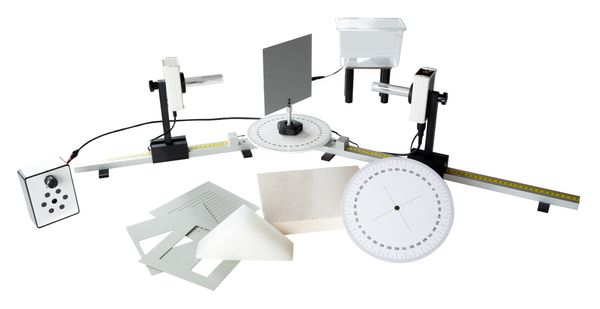
This complete set allows microwaves to be transmitted and received. The components and equipment included allow for various experiments (e.g. Michelson-Interferometer) to be performed. These can achieve both qualitative and quantitative results. The transmitter's output is an electro-magnetic wave with wavelength in the cm range; it is picked up using a receiver. The transmitter signal, once it has reached the receiver, can be heard by a loudspeaker which is part of the scope of supply and makes the microwave set also ideal for the demonstration of wave phenomena in teacher experiments and in the lecture hall. In addition, the intensity of the signal can also be controlled.

Benefits

  • Complete set - no additional accessories required
  • including extensive interactive learning unit: https://www.curriculab.de/MDlvtcUSEeDVmByGGJRt
  • Can be used qualitatively (e.g. for demo experiments) and quantitatively (e.g. in lab courses)
  • Can be used as a Michelson interferometer
  • Includes loudspeaker to make wave phenomena audible - perfect for demo experiments
  • An oscilloscope with the necessary adapter 07542-26 can also be used instead of the supplied loudspeaker

Equipment and Technical Data

The following experiments can be performed:

  • Reflection
  • Refraction
  • Prism deviation
  • Diffraction
  • Stationary waves
  • Polarization
  • Absorption and the refractive index

Scope of delivery:

  • 1 Transmitter (frequency f = 10.5 GHz, wavelength lambda = 2.85 cm)
  • 1 Receiver (operational distance: 0 to 1.5 m)
  • 1 Loudspeaker with volume know, output power: 1 W
  • 1 Jointed bench with two arms (650 mm and 480 mm long), with plate holder and protractor
  • 1 Set of 4 plates (155 x 155 mm):
    • Reflection plate
    • Polarization grating, 11 slits, 3 mm each
    • Slit plate (slit width 50 mm)
    • Double slit plate (slit width 35 mm)
  • 1 Paraffin prism (125 x 125 x 50 mm)
  • Polystyrene body (200 x 200 x 20 mm)
  • Water tank (for wave absorption experiments)
  • Protractor with graduated scale (accuracy: 1°)
  • All required connecting cables
  • Power supply: 12 VDC for 110...240 V with multi-plug adapters for different countries
  • Operating manual

Shape of the internal modulating signal: f=550 Hz

Maximum amplitude for the external modulating signal: 500 mV peak to peak

Toggle switch on transmitter to modulate carrier wave the the internal or an external signal

Weight: 7.7 kg


PHYWE Systeme GmbH & Co. KG
Robert-Bosch-Breite 10 – 37079 Göttingen – Germany
www.phywe.com

Contact