 Service
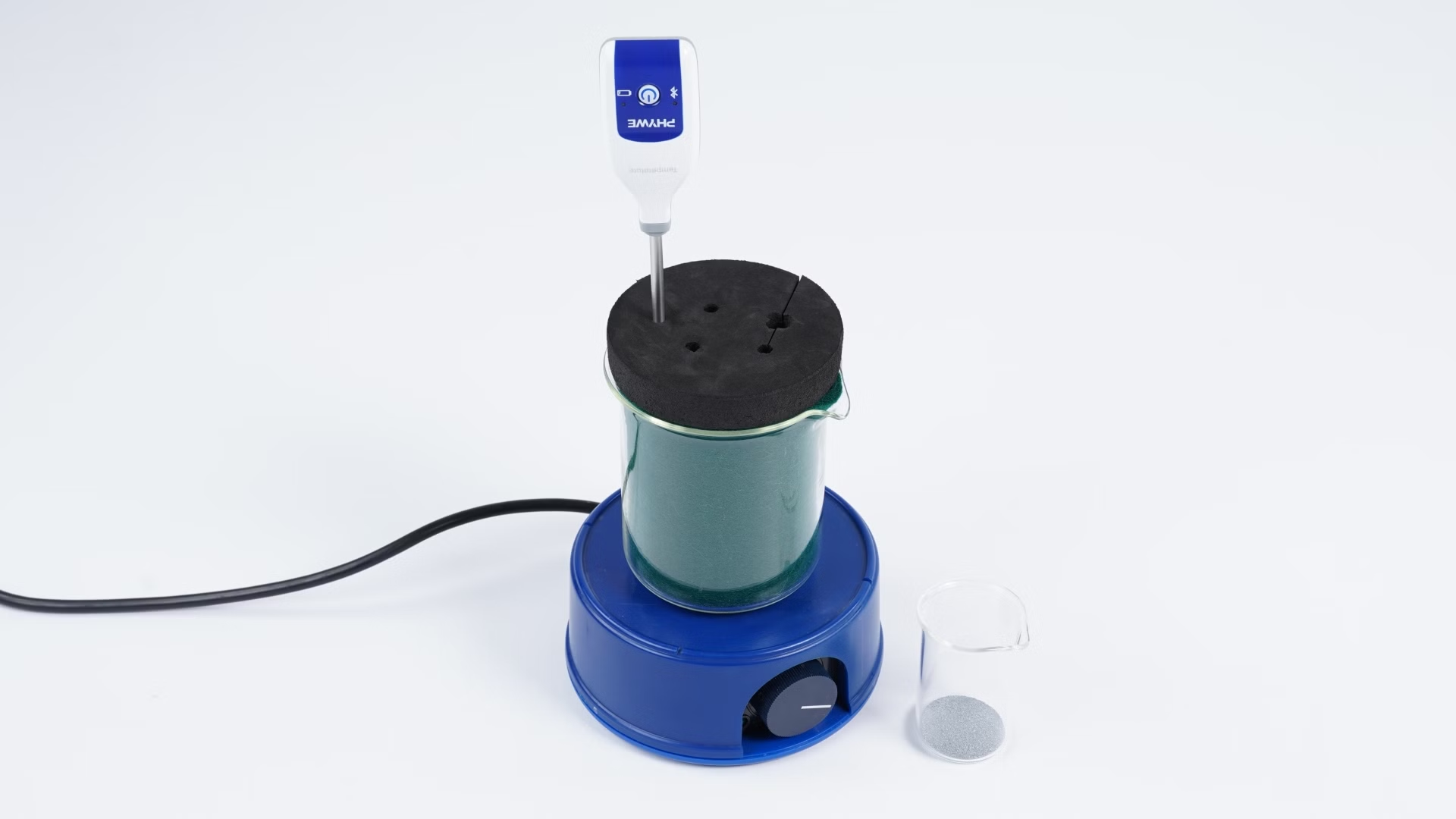
Principle
In the reaction of copper sulfate with zinc, elemental copper and zinc ions are formed. This redox reaction is strongly exothermic: a considerable amount of energy is released. In an experiment, students can measure this released energy as a temperature increase using a calorimeter. The same reaction also underlies the Daniell element (P7400469), which converts chemical energy into electrical energy. This allows students to recognize that chemically stored energy can be transformed into different forms of energy – for example, thermal or electrical energy – depending on the experimental setup. Afterwards, they calculate the molar reaction enthalpy and compare the determined value with the literature value.
The experiment can be carried out with the supplied stirring rod or alternatively with a magnetic stirrer (see recommended accessories).
Tasks
- The students set up a simple student calorimeter.
- They measure the temperature change after adding zinc powder to a copper sulfate solution.
- They calculate the molar reaction enthalpy and compare it with the literature value, discussing possible causes for deviations.
Learning objectives
Through this experiment, students deepen their knowledge of redox chemistry and learn to relate chemical processes to reaction enthalpy. They build a simple calorimeter and analyze the exothermic chemical reaction of zinc and copper sulfate by measuring the temperature. Students should also recognize possible causes for deviations between the experimental and literature values.
Benefits
- Easy execution and promotion of technical understanding with a self-assembled calorimeter made of standard laboratory equipment.
- Promotes understanding of energy conversions in redox reactions.
- Strong everyday relevance (e.g., explanation of energy release when lighting a match).
- Experiment relevant for final exams in thermodynamics.
- Quantitative analysis using digital sensors (Cobra SMARTsense).
- Combination of classical experiment and modern data acquisition.
- Opportunity to discuss measurement deviations compared to literature values.
- Fast and simple experiment preparation (instructions and risk assessment available).
Recommended accessories
With these accessories you can generate real added value
