 Service
Also part of:

Article no. 25303-88 | Type: Set

Article no. 25303-88D | Type: Set
Principle
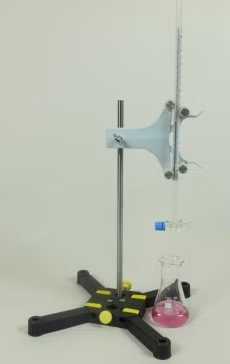
During this experiment, the students have to determine the pKa value of an acetic acid solution with the aid of a suitable indicator (here: phenolphthalein). For this purpose, a known volume of the acid is titrated with a volume of sodium hydroxide of a known concentration (standard solution) until the indicator changes colour. The used volume of the standard solution is read off the burette. The used amount is divided by two. The calculated amount is then added as acetic acid to the original vessel and the solution is tested with a pH strip. The determined pH value is equal to the pKa value of the acetic acid.
Learning objectives
- How to calculate the pK value of acids
Benefits
- Experiment literature available for pupils and teachers: Minimum preparation time
- Simple teaching and efficient learning by using the available interactive experiment literature
