

(function () {
function textOf(el) {
return (el && el.textContent || "").replace(/\s+/g, " ").trim();
}
function resolveItemUrl() {
var match = window.location.search.match(/[?&]item=(\d+)/);
if (!match) {
return null;
}
return window.location.origin + "/a-" + match[1] + "/";
}
function loadAccordion() {
var url = resolveItemUrl();
if (!url) {
return Promise.resolve(null);
}
return new Promise(function (resolve, reject) {
var xhr = new XMLHttpRequest();
xhr.open("GET", url, true);
xhr.onload = function () {
if (xhr.status < 200 || xhr.status >= 400) {
reject(new Error("item page " + xhr.status));
return;
}
var doc = new DOMParser().parseFromString(xhr.responseText, "text/html");
resolve(doc.querySelector(".phywe-item-accordion"));
};
xhr.onerror = function () {
reject(new Error("item page network error"));
};
xhr.send();
});
}
function parseItemBlocks(scope, withQuantity) {
if (!scope) {
return [];
}
var rows = scope.querySelectorAll(".itemslist .row.itemblocks");
var items = [];
for (var i = 0; i < rows.length; i++) {
var cols = rows[i].children;
if (!cols.length) {
continue;
}
var nameLink = cols[0].querySelector("a");
var numberLink = cols[1] ? cols[1].querySelector("a") : null;
var item = {
name: textOf(nameLink || cols[0]),
mappedTo: textOf(numberLink)
};
if (withQuantity && cols[2]) {
var qty = parseInt(textOf(cols[2]).replace(/[^\d]/g, ""), 10);
item.quantity = isNaN(qty) ? textOf(cols[2]) : String(qty);
}
if (item.name) {
items.push(item);
}
}
return items;
}
function fillTable(tableId, items, withQuantity) {
var table = document.getElementById(tableId);
if (!table || !items.length) {
return;
}
var tbody = table.querySelector("tbody");
for (var i = 0; i < items.length; i++) {
var tr = document.createElement("tr");
var nameTd = document.createElement("td");
nameTd.style.width = "80%";
nameTd.textContent = items[i].name;
tr.appendChild(nameTd);
var numberTd = document.createElement("td");
numberTd.textContent = items[i].mappedTo;
tr.appendChild(numberTd);
if (withQuantity) {
var qtyTd = document.createElement("td");
qtyTd.textContent = items[i].quantity || "";
tr.appendChild(qtyTd);
}
tbody.appendChild(tr);
}
var wrapper = table.parentElement;
while (wrapper && wrapper.className.indexOf("printtablediv") === -1) {
wrapper = wrapper.parentElement;
}
if (wrapper) {
wrapper.style.display = "";
}
}
function stepTitle(stepEl) {
if (!stepEl) {
return "";
}
var titleEl = stepEl.querySelector(".card-header button div") || stepEl.querySelector(".card-header button");
return textOf(titleEl);
}
function setHeadline(tableId, title) {
var headline = document.querySelector("#" + tableId + " .printtableheadline");
if (headline && title) {
headline.textContent = title;
}
}
function parseMedia(scope) {
if (!scope) {
return [];
}
var rows = scope.querySelectorAll(".itemslist .row.itemblocks");
var items = [];
for (var i = 0; i < rows.length; i++) {
var cols = rows[i].children;
if (!cols.length) {
continue;
}
var nameLink = cols[0].querySelector("a");
var fileLink = cols[1] ? cols[1].querySelector("a") : null;
var item = {
name: textOf(nameLink || cols[0]),
mappedTo: textOf(fileLink || cols[1]),
quantity: cols[2] ? textOf(cols[2]) : ""
};
if (item.name) {
items.push(item);
}
}
return items;
}
function fillFromAccordion(accordion) {
if (!accordion) {
return;
}
var versucheStep = accordion.querySelector('[data-step="versuche"]');
var versuche = parseItemBlocks(versucheStep, false);
setHeadline("print-versuche", stepTitle(versucheStep));
fillTable("print-versuche", versuche, false);
var lieferumfangStep = accordion.querySelector('[data-step="lieferumfang"]');
var lieferumfang = parseItemBlocks(lieferumfangStep, true);
fillTable("print-lieferumfang", lieferumfang, true);
var zubehoer = accordion.querySelector('[data-step="zubehoer"]');
var sections = zubehoer ? zubehoer.querySelectorAll(".card-body") : [];
var notwendig = [];
var empfohlen = [];
for (var i = 0; i < sections.length; i++) {
var items = parseItemBlocks(sections[i], false);
if (sections[i].querySelector(".text-red, .icon-warning-black")) {
notwendig = items;
} else if (sections[i].querySelector(".text-green, .icon-Mehrwert_black")) {
empfohlen = items;
}
}
fillTable("print-zubehoer-notwendig", notwendig, false);
fillTable("print-zubehoer-empfohlen", empfohlen, false);
var mediaStep = accordion.querySelector('[data-step="media"]');
var media = parseMedia(mediaStep);
setHeadline("print-media", stepTitle(mediaStep));
fillTable("print-media", media, true);
}
function start() {
var itemUrl = resolveItemUrl();
if (!itemUrl) {
setTimeout(function () {
window.print();
}, 2000);
return;
}
loadAccordion()
.then(function (accordion) {
fillFromAccordion(accordion);
})
.catch(function (err) {
if (window.console && console.warn) {
console.warn("Accordion konnte nicht geladen werden:", resolveItemUrl(), err);
}
})
.then(function () {
setTimeout(function () {
window.print();
}, 500);
});
}
if (document.readyState === "loading") {
document.addEventListener("DOMContentLoaded", start);
} else {
start();
}
})();
Technical data Damped Oscillation with Cobra DigiMotionArticle no: P6211000 ![]() Principle Damped oscillation describes a realistic motion of a pendulum in which energy losses due to friction and air resistance are taken into account. As a result, the amplitude of the pendulum decreases over time until the system eventually comes to rest. With the MotionBoard, oscillations can be recorded precisely, allowing the decay of amplitude and damping parameters to be determined experimentally. Tasks
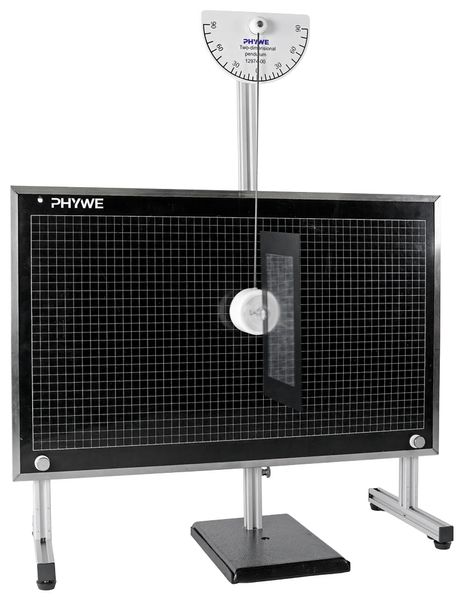
Learning objectives Students should recognize that oscillations are damped by friction and air resistance and that the amplitude decreases over time. They learn to determine damping parameters experimentally, understand the influence of damping elements on the oscillation period, and analyze the decrease in amplitude using diagrams. In doing so, they practice the quantitative analysis of oscillations and the application of mathematical descriptions of damped motion. Benefits
|

