(function () { function textOf(el) { return (el && el.textContent || "").replace(/\s+/g, " ").trim(); } function resolveItemUrl() { var match = window.location.search.match(/[?&]item=(\d+)/); if (!match) { return null; } return window.location.origin + "/a-" + match[1] + "/"; } function loadAccordion() { var url = resolveItemUrl(); if (!url) { return Promise.resolve(null); } return new Promise(function (resolve, reject) { var xhr = new XMLHttpRequest(); xhr.open("GET", url, true); xhr.onload = function () { if (xhr.status < 200 || xhr.status >= 400) { reject(new Error("item page " + xhr.status)); return; } var doc = new DOMParser().parseFromString(xhr.responseText, "text/html"); resolve(doc.querySelector(".phywe-item-accordion")); }; xhr.onerror = function () { reject(new Error("item page network error")); }; xhr.send(); }); } function parseItemBlocks(scope, withQuantity) { if (!scope) { return []; } var rows = scope.querySelectorAll(".itemslist .row.itemblocks"); var items = []; for (var i = 0; i < rows.length; i++) { var cols = rows[i].children; if (!cols.length) { continue; } var nameLink = cols[0].querySelector("a"); var numberLink = cols[1] ? cols[1].querySelector("a") : null; var item = { name: textOf(nameLink || cols[0]), mappedTo: textOf(numberLink) }; if (withQuantity && cols[2]) { var qty = parseInt(textOf(cols[2]).replace(/[^\d]/g, ""), 10); item.quantity = isNaN(qty) ? textOf(cols[2]) : String(qty); } if (item.name) { items.push(item); } } return items; } function fillTable(tableId, items, withQuantity) { var table = document.getElementById(tableId); if (!table || !items.length) { return; } var tbody = table.querySelector("tbody"); for (var i = 0; i < items.length; i++) { var tr = document.createElement("tr"); var nameTd = document.createElement("td"); nameTd.style.width = "80%"; nameTd.textContent = items[i].name; tr.appendChild(nameTd); var numberTd = document.createElement("td"); numberTd.textContent = items[i].mappedTo; tr.appendChild(numberTd); if (withQuantity) { var qtyTd = document.createElement("td"); qtyTd.textContent = items[i].quantity || ""; tr.appendChild(qtyTd); } tbody.appendChild(tr); } var wrapper = table.parentElement; while (wrapper && wrapper.className.indexOf("printtablediv") === -1) { wrapper = wrapper.parentElement; } if (wrapper) { wrapper.style.display = ""; } } function stepTitle(stepEl) { if (!stepEl) { return ""; } var titleEl = stepEl.querySelector(".card-header button div") || stepEl.querySelector(".card-header button"); return textOf(titleEl); } function setHeadline(tableId, title) { var headline = document.querySelector("#" + tableId + " .printtableheadline"); if (headline && title) { headline.textContent = title; } } function parseMedia(scope) { if (!scope) { return []; } var rows = scope.querySelectorAll(".itemslist .row.itemblocks"); var items = []; for (var i = 0; i < rows.length; i++) { var cols = rows[i].children; if (!cols.length) { continue; } var nameLink = cols[0].querySelector("a"); var fileLink = cols[1] ? cols[1].querySelector("a") : null; var item = { name: textOf(nameLink || cols[0]), mappedTo: textOf(fileLink || cols[1]), quantity: cols[2] ? textOf(cols[2]) : "" }; if (item.name) { items.push(item); } } return items; } function fillFromAccordion(accordion) { if (!accordion) { return; } var versucheStep = accordion.querySelector('[data-step="versuche"]'); var versuche = parseItemBlocks(versucheStep, false); setHeadline("print-versuche", stepTitle(versucheStep)); fillTable("print-versuche", versuche, false); var lieferumfangStep = accordion.querySelector('[data-step="lieferumfang"]'); var lieferumfang = parseItemBlocks(lieferumfangStep, true); fillTable("print-lieferumfang", lieferumfang, true); var zubehoer = accordion.querySelector('[data-step="zubehoer"]'); var sections = zubehoer ? zubehoer.querySelectorAll(".card-body") : []; var notwendig = []; var empfohlen = []; for (var i = 0; i < sections.length; i++) { var items = parseItemBlocks(sections[i], false); if (sections[i].querySelector(".text-red, .icon-warning-black")) { notwendig = items; } else if (sections[i].querySelector(".text-green, .icon-Mehrwert_black")) { empfohlen = items; } } fillTable("print-zubehoer-notwendig", notwendig, false); fillTable("print-zubehoer-empfohlen", empfohlen, false); var mediaStep = accordion.querySelector('[data-step="media"]'); var media = parseMedia(mediaStep); setHeadline("print-media", stepTitle(mediaStep)); fillTable("print-media", media, true); } function start() { var itemUrl = resolveItemUrl(); if (!itemUrl) { setTimeout(function () { window.print(); }, 2000); return; } loadAccordion() .then(function (accordion) { fillFromAccordion(accordion); }) .catch(function (err) { if (window.console && console.warn) { console.warn("Accordion konnte nicht geladen werden:", resolveItemUrl(), err); } }) .then(function () { setTimeout(function () { window.print(); }, 500); }); } if (document.readyState === "loading") { document.addEventListener("DOMContentLoaded", start); } else { start(); } })();
 

Technical data


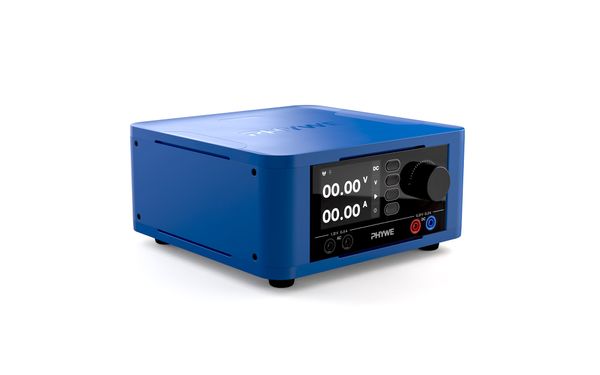
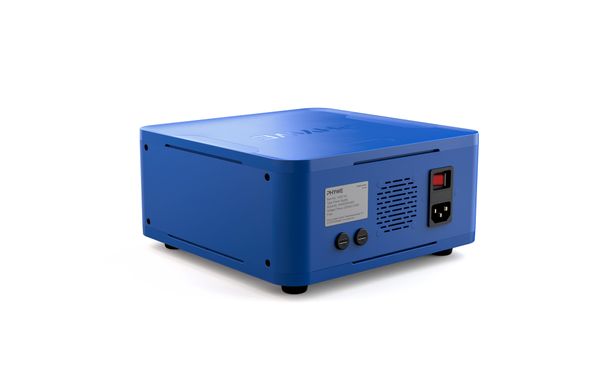
PHYWE Power supply, 230 V, DC: 0...12 V, 0 ... 2 A / AC: 0 ... 12 V, 0,1 ... 5A

Article no: 13507-93
Function and Applications
 
Focus on teaching, not technology: the PHYWE student power supply is a device for all science lessons. It can be used from grade 5 through to upper secondary level and at university, across physics, chemistry and biology.
 
The device supplies DC and AC voltage for student experiments in electricity, electronics, optics and beyond. Both outputs can be used at the same time, so there is no need for a second device. The low residual ripple of max. 1 mVpp ensures precise, reproducible measurements, for example of semiconductor characteristics. Thanks to clear, self-explanatory operation, the device is ready to use immediately without any instruction.
 
Optional extension: with the app add-on, the teacher can control a single device or the entire class set centrally. The teacher reads the current values of all devices, sets voltage and current, and limits or locks outputs. The app is not required for operation. All functions are always available directly on the device.
 
A safety transformer, electronic current limiting and overtemperature protection make the device RiSU-compliant (German safety guidelines for schools) and robust against typical operating errors. No spare fuses are required. The impact-resistant, stackable housing is designed for years of use as a class set, and identical devices will remain available for purchase in the long term. Made in Germany.
 
Benefits
 
One device for all levels and subjects: from grade 5 through to upper secondary level and at university, usable across subjects
Ready to use immediately: self-explanatory operation, display for voltage and current, operating languages DE/EN/FR/ES
DC and AC simultaneously: continuously adjustable DC voltage plus true sine-wave AC voltage for AC, induction and transformer experiments
Precise measurements: residual ripple max. 1 mVpp, suitable up to university lab courses
Safe according to RiSU: safety transformer according to DIN EN 61558-2-6, protection class I, floating (isolated from earth and ground), defined power-on state
Robust against operating errors: current limiting for AC and DC, overload- and short-circuit-proof, overtemperature protection, no spare fuses required
Stackable and mobile: space-saving storage, easy to carry with a textile carrying strap (accessory)
Future-proof investment: available long-term, with identical devices available for repurchase, so the class set stays uniform for many years
Optional app control (add-on): read the values of all devices, set voltage and current, limit and lock outputs. The device is fully functional without the app.
Connectivity: 2× USB-C for powering external devices, MQTT interface
Made in Germany: development, design and final assembly in Germany
 
Technical Specification
 
  • DC voltage: 0 … 12 V, regulated current or voltage source with adjustable current limit: 0 … 2 A / max. 24 W (continuously adjustable)
  • Residual ripple: Upp max. 1 mV
  • AC voltage: continuously adjustable 0 … 12 V; AC current: 0.1 … 5 A / max. 60 VA (sine wave)
  • Integrated colour display
  • Optional control via app add-on: locking, U/I setting, multi-device management; basic functions always available on the device without the app
  • Operating languages: DE, EN, FR, ES
  • 2× USB-C (5 V / 1 A)
  • Connections: 4 mm safety sockets
  • Electronic protection (no spare fuse required)
  • Protection class I (with protective earth conductor)
  • Supply voltage: 230 V~, 50/60 Hz
  • Power consumption: max. approx. 146 VA
  • Safety transformer according to DIN EN 61558-2-6; RiSU-compliant; CE according to EN 61010-1 / EN 61326-1
  • Housing: impact-resistant, stackable
  • Dimensions (mm): 225 x 110 x 245 (W x H x D)
  • Weight: approx. 3.2 kg


i>


PHYWE Systeme GmbH & Co. KG
Robert-Bosch-Breite 10 – 37079 Göttingen – Germany
www.phywe.com

Contact