 Service
Principle
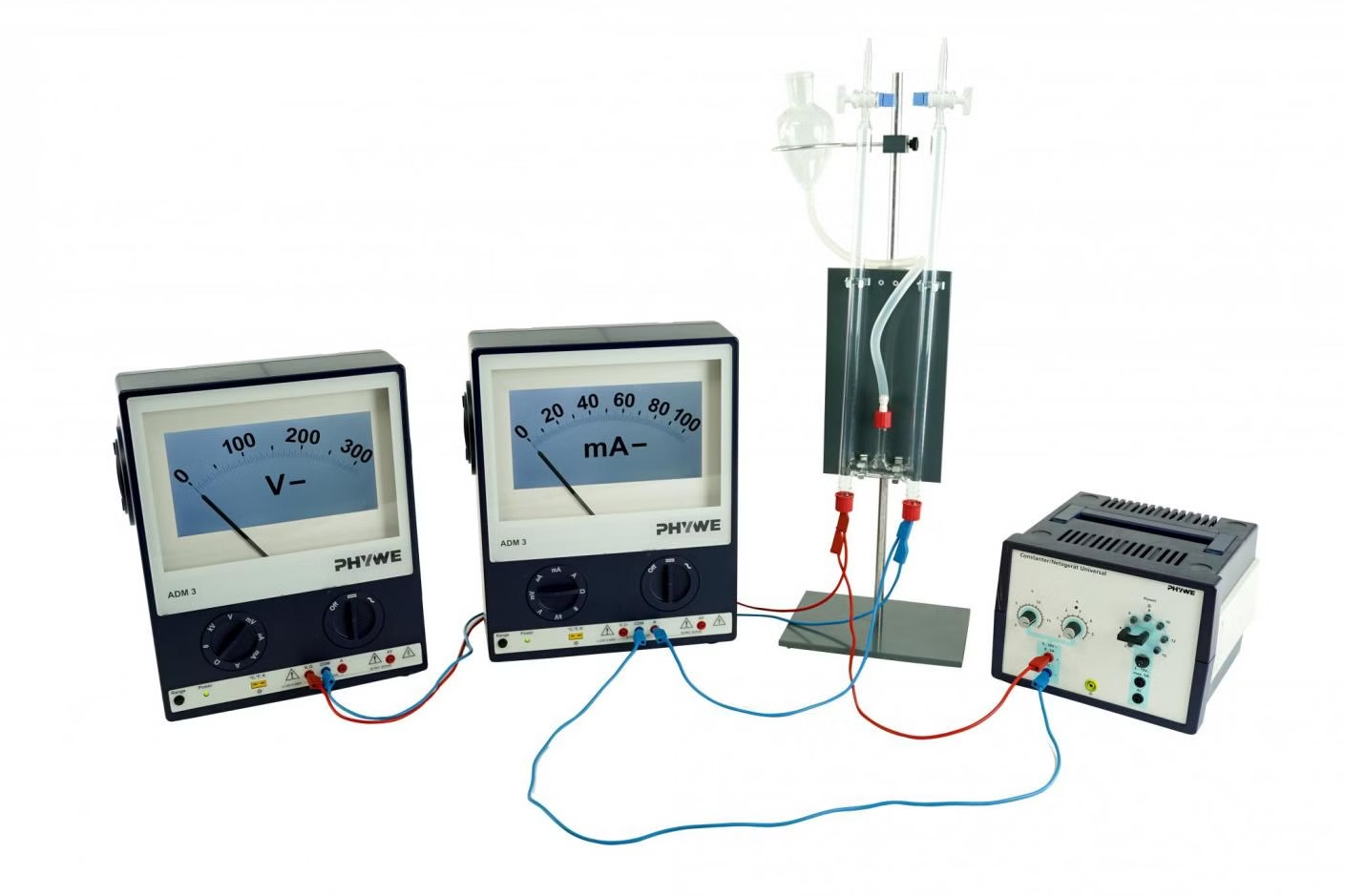
During an electrolysis reaction, the deposited mass m of a substance is directly proportional to the flow of charge (First Faraday's law). The second Faraday law states that the electrochemical equivalents k (deposited mass per charge unit) behave like the equivalent masses (molar mass M divided by the valency z) of the elements. Both laws can be confirmed experimentally by water decomposition using an apparatus according to Hofmann.
Learning objectives
- Faraday law
- Water decomposion by electrolysis
- Calculation of deposited mass during an electrolysis
Device name
Article no.
Quantity
Name
File name
File type
Digital learning

Free shipping from 300,- €