 Service

Also part of:
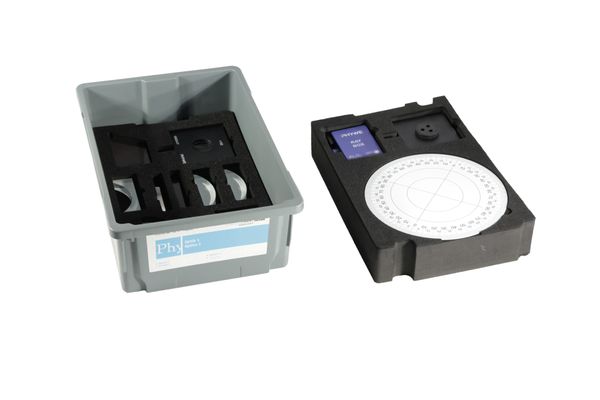
Student set optics 1 including LED-/laser light source
Article no. 25278-88 | Type: Set
Delivery time:
available
Principle
In additive colour mixing, different colours are produced by superimposing the three primary colours of light: red, green and blue. Using an RGB LED colour mixing lamp and a lens, students investigate how coloured light beams can be combined and how overlapping all three primary colours produces white light.
Benefits
- Simple experimental setup with only a few components
- Clear demonstration of additive colour mixing through immediately visible colour changes
- Practical connection to screens, televisions and modern LED lighting
Tasks
How is a colour television picture produced? Investigate which secondary colours can be produced by different combinations of coloured light beams.
Device name
Article no.
Quantity
Name
File name
File type
Digital learning

Free shipping from 300,- €