 Service

Also part of:
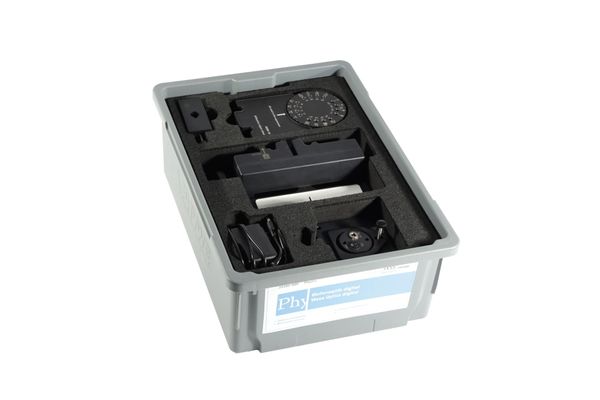
Student Set wave optics, digital, TESS advanced Physics
Article no. 25280-88D | Type: Set
Delivery time:
4-8 weeks
Principle
Monochromatic light is diffracted at single slits of different widths. This produces a diffraction pattern with a central maximum and lateral minima. By comparing different slit widths, it becomes clear that the smaller the slit width, the wider the central maximum.Tasks
- Examine the diffraction patterns produced by several single slits.
- Measure the positions of the diffraction minima or the width of the central maximum for different slit widths.
- Determine the relationship between slit width, wavelength, distance, and the positions of the minima.
Learning objectives
Learners recognize diffraction as a wave property of light and understand the influence of slit width on the diffraction pattern. They apply the relationship between wavelength, slit width, distance, and the positions of the minima, and connect experimental observations with the wave model of light.
Benefits
- Clear investigation of a central phenomenon in wave optics
- Precise digital recording and analysis of diffraction patterns
- Development of experimental skills and confident handling of measurement data
- Comparison of several slit widths in a compact setup
Device name
Article no.
Quantity
Name
File name
File type
Digital learning

Free shipping from 300,- €