 Service

Technical data Cannizzaro reaction and reaction of benzaldehyde with ethylene glycolArticle no: P3101600 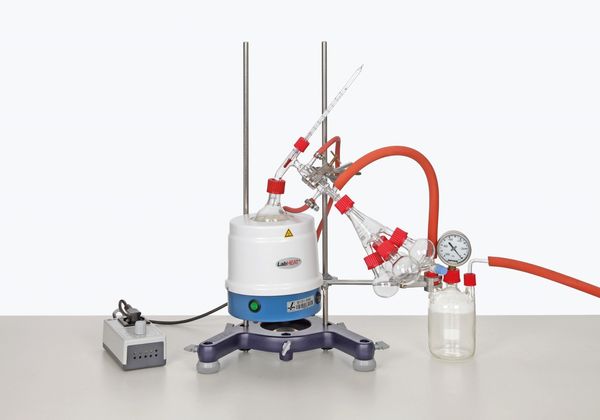
<!DOCTYPE html PUBLIC "-//W3C//DTD XHTML 1.0 Transitional//EN"
"http://www.w3.org/TR/xhtml1/DTD/xhtml1-transitional.dtd">
Principle In the first part of the experiment, benzaldehyde disproportionates under the effect of alkalis to alcohol-soluble benzyl alcohol and water-soluble benzoic acid that precipitates when the aqueous solution is acidified. In the second part, benzaldehyde reacts with ethylene glycol to form a cyclic acetal. This ethylene acetal is resistant against basic and oxidising reagents. In an acid medium, it once again splits up into its original products. It is because of these characteristics that cyclic acetals are used for blocking the carbonyl function in preparative, organic chemistry. Benefits
Tasks
Learning objectives
Necessary accessories
|
PHYWE Systeme GmbH & Co. KG
Robert-Bosch-Breite 10 – 37079 Göttingen – Germany
www.phywe.com
Robert-Bosch-Breite 10 – 37079 Göttingen – Germany
www.phywe.com