 Service
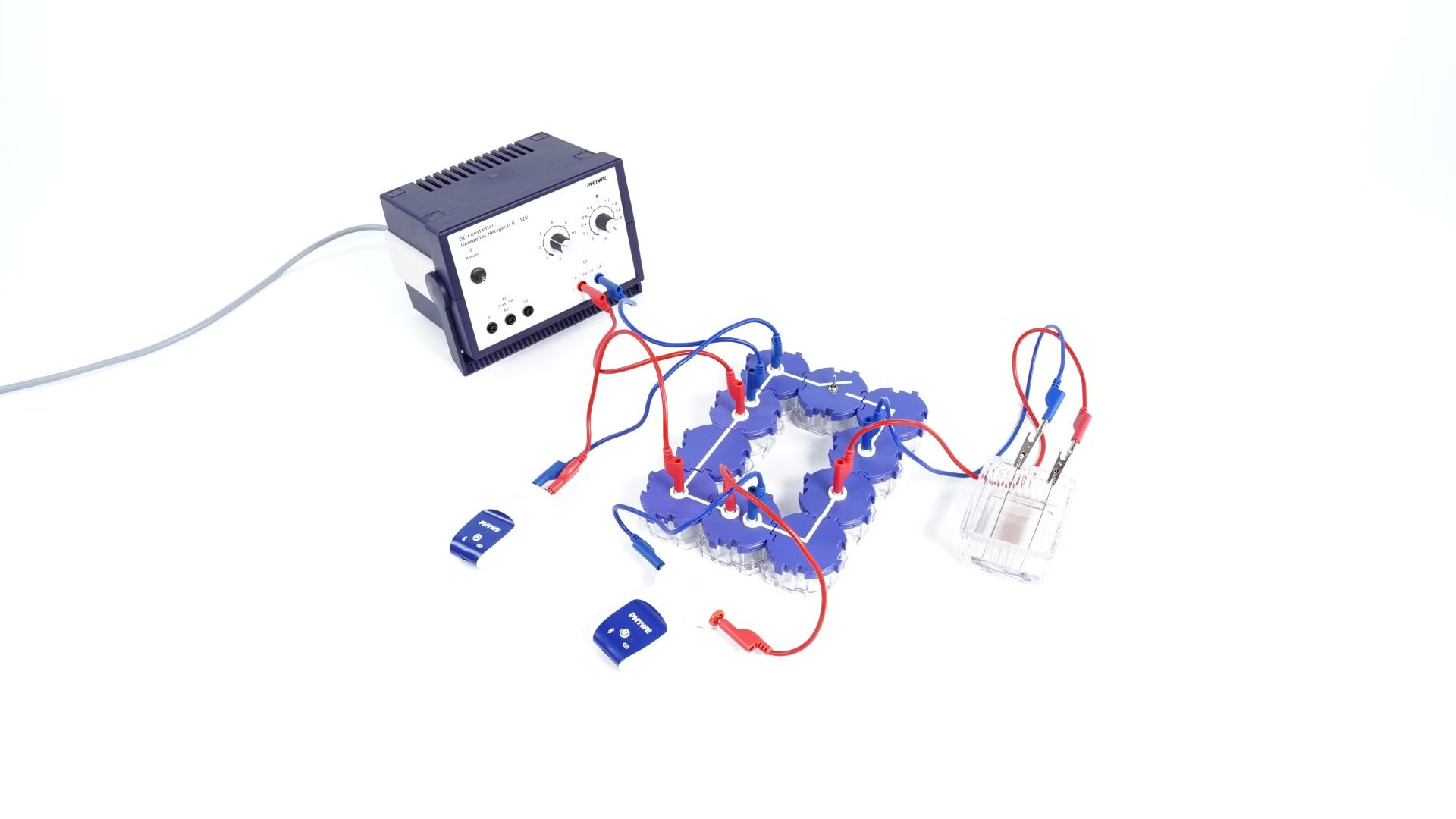
Principle
If a voltage is applied to two electrodes immersed in the aqueous solution of an electrolyte, the ions move in the direction of the electrode with the opposite electrical polarity. Aqueous solutions of electrolytes are therefore electrically conductive.
Tasks
- Investigate the conductivity of distilled water.
- Repeat the experiment and determine the conductivity of other substances:
- salt, salt dissolved in water, drinking water, a dilute acid, a dilute base
Learning objectives
In this experiment, students should find out why an undissolved (or non-melted) electrolyte and distilled water are non-conductive or almost non-conductive.
Benefits
- Contact reliability thanks to puzzle-like interlocking components with hard gold-plated, corrosion-resistant contacts
- Double learning success: electrical circuit diagram visible on the top and real components on the bottom
- Future-oriented teaching: Integration of sensors (Cobra SMARTsense) in digital science lessons
Name
File name
File type
Digital learning

Free shipping from 300,- €