Hier der vollständige Code. Geändert ist nur resolveItemUrl(), dazu kommt die neue Hilfsfunktion languagePrefix(). Die Sprache wird aus dem URL-Präfix der Druckseite übernommen, z. B. /es/. html
(function () { function textOf(el) { return (el && el.textContent || "").replace(/\s+/g, " ").trim(); } // Sprachpräfix der aktuellen Seite ermitteln, z. B. "/es" bei /es/druckseite?item=123 // Standardsprache (ohne Präfix) liefert "". function languagePrefix() { var m = window.location.pathname.match(/^\/([a-z]{2})(?=\/|$)/i); return m ? "/" + m[1].toLowerCase() : ""; } function resolveItemUrl() { var match = window.location.search.match(/[?&]item=(\d+)/); if (!match) { return null; } return window.location.origin + languagePrefix() + "/a-" + match[1] + "/"; } function loadAccordion() { var url = resolveItemUrl(); if (!url) { return Promise.resolve(null); } return new Promise(function (resolve, reject) { var xhr = new XMLHttpRequest(); xhr.open("GET", url, true); xhr.onload = function () { if (xhr.status < 200 || xhr.status >= 400) { reject(new Error("item page " + xhr.status)); return; } var doc = new DOMParser().parseFromString(xhr.responseText, "text/html"); resolve(doc.querySelector(".phywe-item-accordion")); }; xhr.onerror = function () { reject(new Error("item page network error")); }; xhr.send(); }); } function parseItemBlocks(scope, withQuantity) { if (!scope) { return []; } var rows = scope.querySelectorAll(".itemslist .row.itemblocks"); var items = []; for (var i = 0; i < rows.length; i++) { var cols = rows[i].children; if (!cols.length) { continue; } var nameLink = cols[0].querySelector("a"); var numberLink = cols[1] ? cols[1].querySelector("a") : null; var item = { name: textOf(nameLink || cols[0]), mappedTo: textOf(numberLink) }; if (withQuantity && cols[2]) { var qty = parseInt(textOf(cols[2]).replace(/[^\d]/g, ""), 10); item.quantity = isNaN(qty) ? textOf(cols[2]) : String(qty); } if (item.name) { items.push(item); } } return items; } function fillTable(tableId, items, withQuantity) { var table = document.getElementById(tableId); if (!table || !items.length) { return; } var tbody = table.querySelector("tbody"); for (var i = 0; i < items.length; i++) { var tr = document.createElement("tr"); var nameTd = document.createElement("td"); nameTd.style.width = "80%"; nameTd.textContent = items[i].name; tr.appendChild(nameTd); var numberTd = document.createElement("td"); numberTd.textContent = items[i].mappedTo; tr.appendChild(numberTd); if (withQuantity) { var qtyTd = document.createElement("td"); qtyTd.textContent = items[i].quantity || ""; tr.appendChild(qtyTd); } tbody.appendChild(tr); } var wrapper = table.parentElement; while (wrapper && wrapper.className.indexOf("printtablediv") === -1) { wrapper = wrapper.parentElement; } if (wrapper) { wrapper.style.display = ""; } } function stepTitle(stepEl) { if (!stepEl) { return ""; } var titleEl = stepEl.querySelector(".card-header button div") || stepEl.querySelector(".card-header button"); return textOf(titleEl); } function setHeadline(tableId, title) { var headline = document.querySelector("#" + tableId + " .printtableheadline"); if (headline && title) { headline.textContent = title; } } function parseMedia(scope) { if (!scope) { return []; } var rows = scope.querySelectorAll(".itemslist .row.itemblocks"); var items = []; for (var i = 0; i < rows.length; i++) { var cols = rows[i].children; if (!cols.length) { continue; } var nameLink = cols[0].querySelector("a"); var fileLink = cols[1] ? cols[1].querySelector("a") : null; var item = { name: textOf(nameLink || cols[0]), mappedTo: textOf(fileLink || cols[1]), quantity: cols[2] ? textOf(cols[2]) : "" }; if (item.name) { items.push(item); } } return items; } function fillFromAccordion(accordion) { if (!accordion) { return; } var versucheStep = accordion.querySelector('[data-step="versuche"]'); var versuche = parseItemBlocks(versucheStep, false); setHeadline("print-versuche", stepTitle(versucheStep)); fillTable("print-versuche", versuche, false); var lieferumfangStep = accordion.querySelector('[data-step="lieferumfang"]'); var lieferumfang = parseItemBlocks(lieferumfangStep, true); fillTable("print-lieferumfang", lieferumfang, true); var zubehoer = accordion.querySelector('[data-step="zubehoer"]'); var sections = zubehoer ? zubehoer.querySelectorAll(".card-body") : []; var notwendig = []; var empfohlen = []; for (var i = 0; i < sections.length; i++) { var items = parseItemBlocks(sections[i], false); if (sections[i].querySelector(".text-red, .icon-warning-black")) { notwendig = items; } else if (sections[i].querySelector(".text-green, .icon-Mehrwert_black")) { empfohlen = items; } } fillTable("print-zubehoer-notwendig", notwendig, false); fillTable("print-zubehoer-empfohlen", empfohlen, false); var mediaStep = accordion.querySelector('[data-step="media"]'); var media = parseMedia(mediaStep); setHeadline("print-media", stepTitle(mediaStep)); fillTable("print-media", media, true); } function start() { var itemUrl = resolveItemUrl(); if (!itemUrl) { setTimeout(function () { window.print(); }, 2000); return; } loadAccordion() .then(function (accordion) { fillFromAccordion(accordion); }) .catch(function (err) { if (window.console && console.warn) { console.warn("Accordion konnte nicht geladen werden:", itemUrl, err); } }) .then(function () { setTimeout(function () { window.print(); }, 500); }); } if (document.readyState === "loading") { document.addEventListener("DOMContentLoaded", start); } else { start(); } })();
 

Datos técnicos


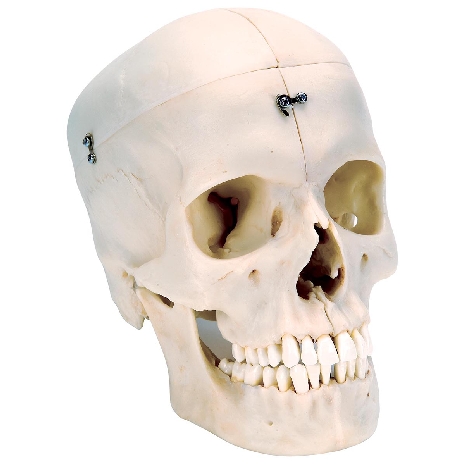
Modelo de calavera humana BONElike™, 6 piezas

Nº de artículo 3BS-1000062

Funciones y uso

Este modelo de cráneo BONElike™ aporta el realismo de la anatomía humana a cualquier aula. Los cráneos BONElike™ están hechos de un nuevo material que permite una reproducción absolutamente natural incluso de las estructuras anatómicas más finas del cráneo humano por primera vez. Los huesos fabricados con 3B BONElike™ parecen reales, tienen un tacto absolutamente natural y un peso casi exacto al de un hueso natural. Esta versión representa un cráneo completo seccionado medianamente. La tapa del cráneo puede desmontarse en 2 mitades, al igual que la base del cráneo. El tabique nasal y la mandíbula completa también son desmontables. Para demostrar el movimiento del masticador, la mandíbula inferior se monta de forma flexible. Un cráneo excelente para estudiar la estructura ósea y la complicada anatomía del cráneo humano. Esto es lo que dicen los clientes de 3B sobre 3B BONElike™:"Este modelo tiene un aspecto "envejecido" que lo hace parecer un espécimen real. Todos los dientes están presentes y las estructuras finas, como la apófisis estiloides, la espina esfenoidal y el hamulus pterigoideo, están prístinas. Estas frágiles estructuras suelen romperse poco después de que los estudiantes tengan en sus manos un cráneo. Sin embargo, en su estado plástico son más fuertes y probablemente resistan los rigores del uso mejor que el original. Lo mismo ocurre con las zonas finas, como la lámina papirácea y otras partes de la pared orbital, que, aunque se reconocen en el modelo, es poco probable que se rompan tan fácilmente como lo haría un ejemplar natural. Se podría decir que el modelo ha ganado en solidez y durabilidad a costa, quizá, de un pequeño intercambio con el realismo, pero este intercambio merece la pena por ser principalmente una herramienta de enseñanza." -Dr. David Rapaport, División de Anatomía, Departamento de Cirugía, Universidad de California, San Diego


PHYWE Systeme GmbH & Co. KG
Robert-Bosch-Breite 10 – 37079 Göttingen – Deutschland
www.phywe.com